

Share section:
2.7 Implement a repeatable
process for optimizing AI
process for optimizing AI
The AI Agent has been trained, tested, deployed, and you've analyzed its initial results. It's handling real conversations, potentially taking actions, producing measurable outcomes, and generating a baseline of performance data.
The focus now shifts from launch to optimization.
The rollout framework becomes a repeatable process for optimizing the AI Agent, applied continuously in smaller, targeted iterations.
Think of it as a flywheel: Train, Test, Deploy, Analyze.
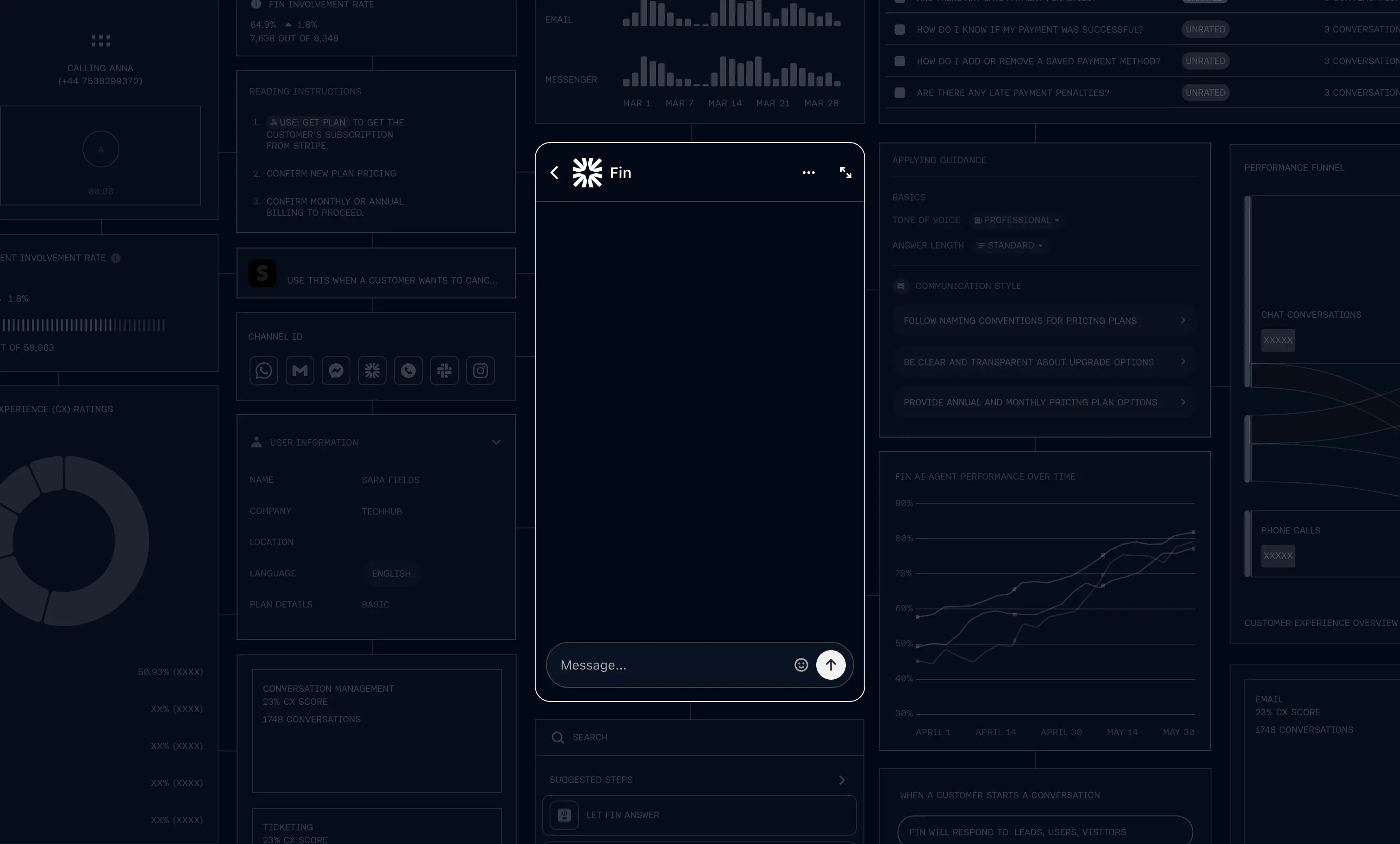
Each cycle compounds the next. Here's how the loop works:
1. Train
Strengthen knowledge, expand coverage, refine behavior
Training is the ongoing work of improving what your AI Agent knows, how it behaves, and the tasks it can handle.
This might include:
Expanding topic and content coverage.
Updating guidance to clarify tone, behavior, or handover rules.
Connecting additional data sources for personalization.
Defining or adjusting multi-step workflows for more complex scenarios that go beyond informational queries (e.g., cancellations or refunds).
The goal is to expand what your AI Agent can handle autonomously while delivering the same high-quality support as your human team.
With Sweo, your team can manage training through a centralized system:
ProceduresUse natural language combined with deterministic controls (when needed) to set Sweo up to handle complex queries with multiple steps, business logic, third-party systems, or cross-team approvals.
GuidanceEnsures every response reflects your brand voice and policies. You can define tone, vocabulary, and style, and set rules for Sweo to follow for specific brands, customer segments, or product lines.
Data connectorsEnable Sweo to securely retrieve data and take action in external systems like Shopify, Stripe, and Salesforce.
2. Test
Validate changes safely before they reach customers
As AI Agents take on complex, multi‑step work, testing becomes essential to maintaining accuracy, reliability, and control before changes reach customers.
This might include:
Identifying mistakes before they impact customers.
Validating new workflows or Procedures (if using Sweo).
Ensuring tone, behavior, and policy alignment.
Confirming you’re happy with how the AI Agent responds across channels and customer types.
Sweo has built-in testing tools that let your team validate changes before they go live:
SimulationsRun fully simulated customer conversations from start to finish to test how Sweo will behave and reason through Procedures before deploying any changes. Simulations test complex workflows and edge cases, with clear visibility into what happened and why, helping teams debug issues and build confidence as complexity scales.
PreviewAllows you to see changes in real-time, how Sweo will respond, and refine answers until you're ready to go live.
Audience testingMakes it easy to test how Sweo answers for various customer types across multiple brands by simulating different audiences or personas.
3. Deploy
Once updates are tested, roll them out in a controlled, measured way.
Deployment decisions typically include:
Which channels (phone, email, chat, social, etc.).
Which audiences (by geography, plan, or customer type).
Your team can configure how updates are deployed using Sweo’s built-in controls:
Channel configurationE.g., Sweo over chat, email, phone (Sweo Voice), social channels, or community platforms like Slack and Discord.
Audience targetingDeploy updates selectively to specific customer groups (plan tier, region, lifecycle stage, etc.).
Routing and channel-specific behaviorControl how Sweo behaves by channel, including escalation rules and when humans step in.
4. Analyze
Post-launch, you need to keep track of your AI Agent’s performance so you can see what’s working well and what needs to be improved.
Focus on macro patterns, not individual queries. Look for:
Topics with frequent handoffs or low resolution (often linked to content gaps).
Follow-up questions that indicate lack of clarity.
Segments or channels with lower satisfaction.
The goal is to identify improvements that will significantly increase resolution, reduce volume on the human side, or expand the AI Agent’s coverage.
Sweo has built-in tools to surface these insights:
Topics ExplorerAutomatically organizes conversations into topics and subtopics, showing what's driving volume and impacting quality.
Topic Trends ReportHighlights weekly changes (volume spikes, drops in resolution, emerging issues) so you can act before customer experience suffers.
Customer Experience ScoreEvaluates and scores every interaction across sentiment, resolution, and service quality.
The Optimize DashboardSurfaces AI-powered Suggestions for immediate improvements.
These insights flow directly back into the Train phase, completing the optimization loop.
Next chapter:Scale it